 Expedition PH Natural History
Philippine Reptiles
340 reptile species, 187 endemic — spitting cobras, water-walking lizards, heat-sensing pit vipers, and one of the world's most endangered crocodilians.
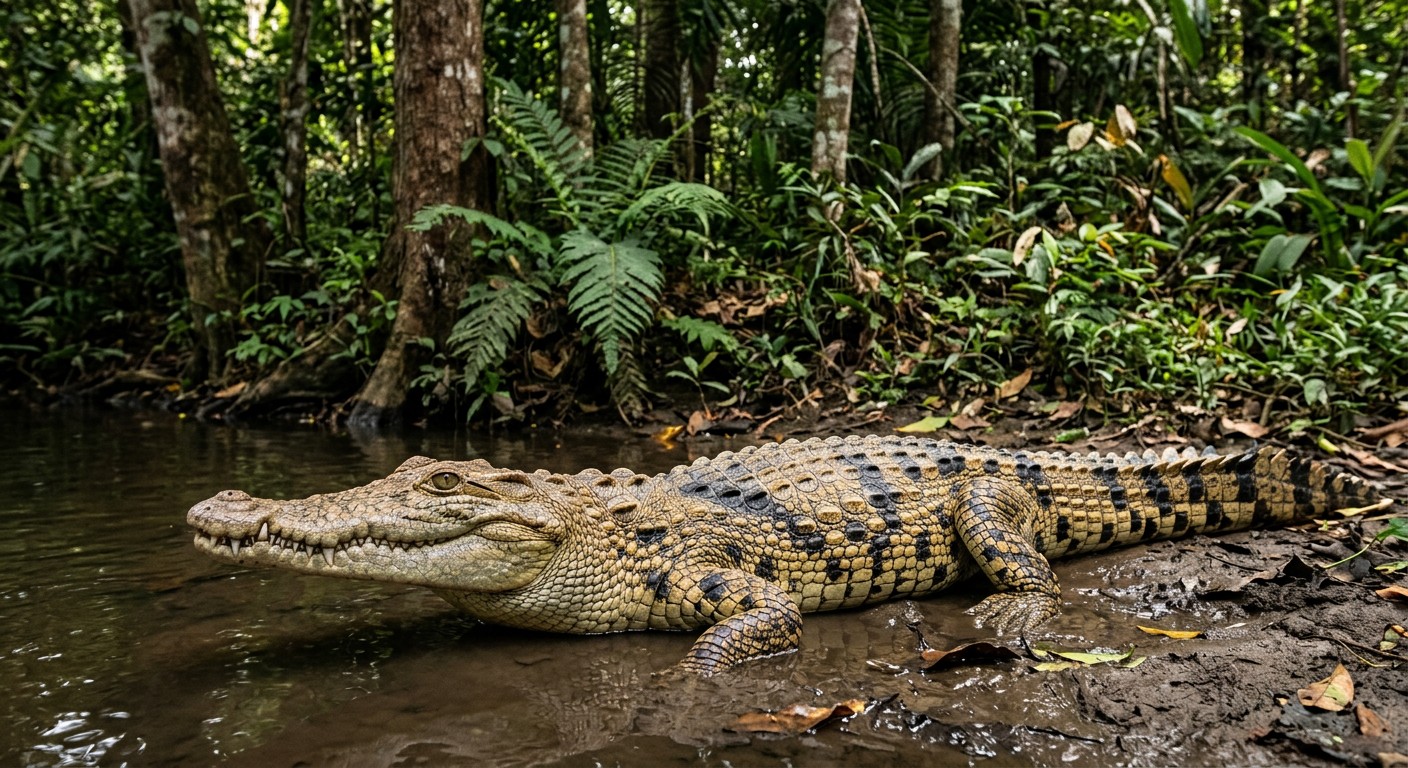
One of the world's most endangered crocodilians — found only in freshwater habitats of the Philippines. Estimated fewer than 250 individuals remain in the wild, protected by community wardens in the Sierra Madre and Mindanao.
The Collection
Twenty-four species — crocodilians, sea turtles, pythons, lizards, geckos, cobras, and frogs — a cross-section of the cold-blooded life of the Philippine archipelago.
One of the world's most endangered crocodilians, found only in freshwater habitats of the Philippines. Estimated fewer than 250 individuals remain.
Critically Endangered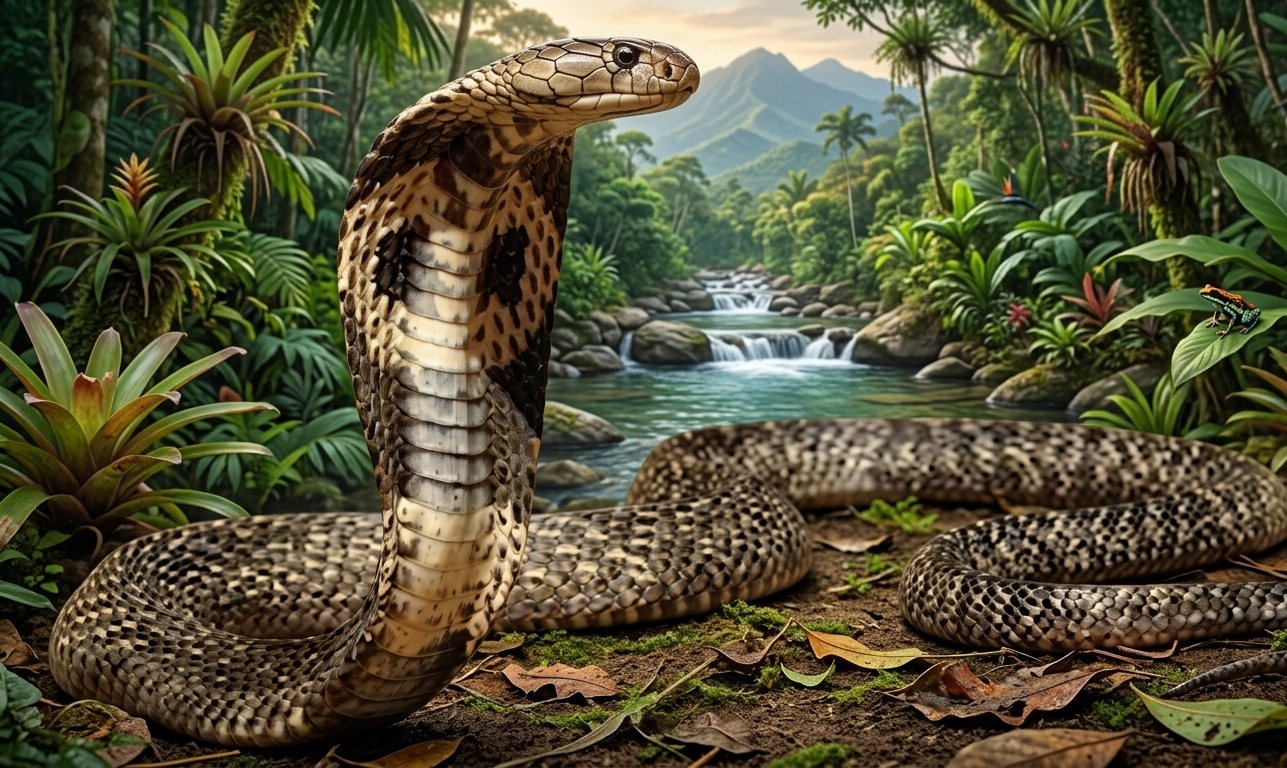
One of the world's most venomous cobras — capable of spitting venom with deadly accuracy. Endemic to the northern Philippines, it inhabits lowland forests, grasslands, and rice paddies.
Least Concern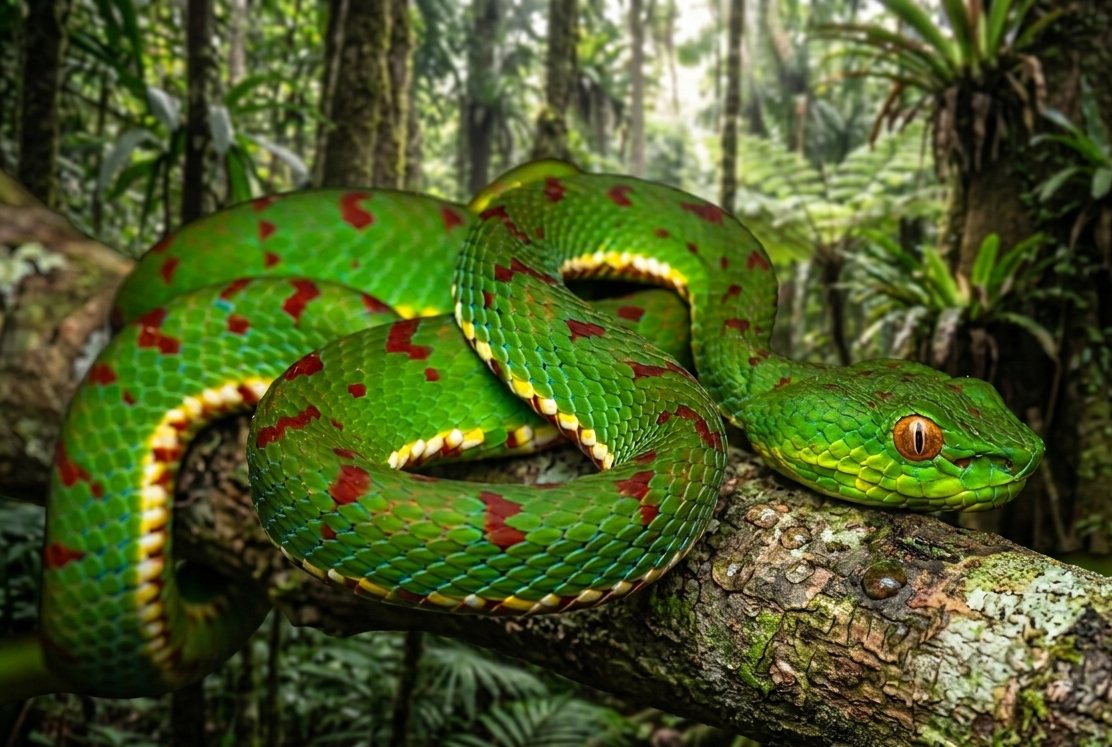
A venomous tree-dwelling viper found across the Philippine archipelago. Its heat-sensing pits make it a precise nocturnal predator of the forest undergrowth and canopy.
Vulnerable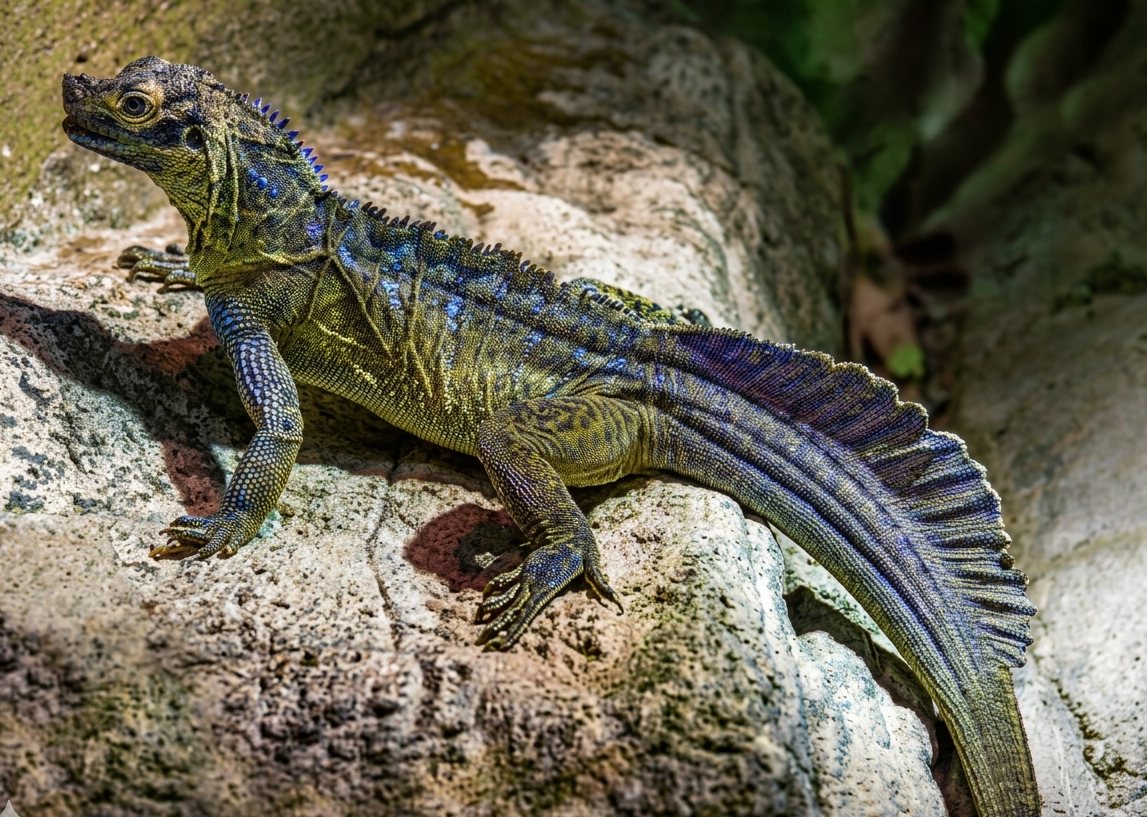
A striking semi-aquatic lizard found along Philippine riverbanks and coasts. Named for the dramatic sail-like crest on its tail, it can run on water and is an excellent swimmer.
Vulnerable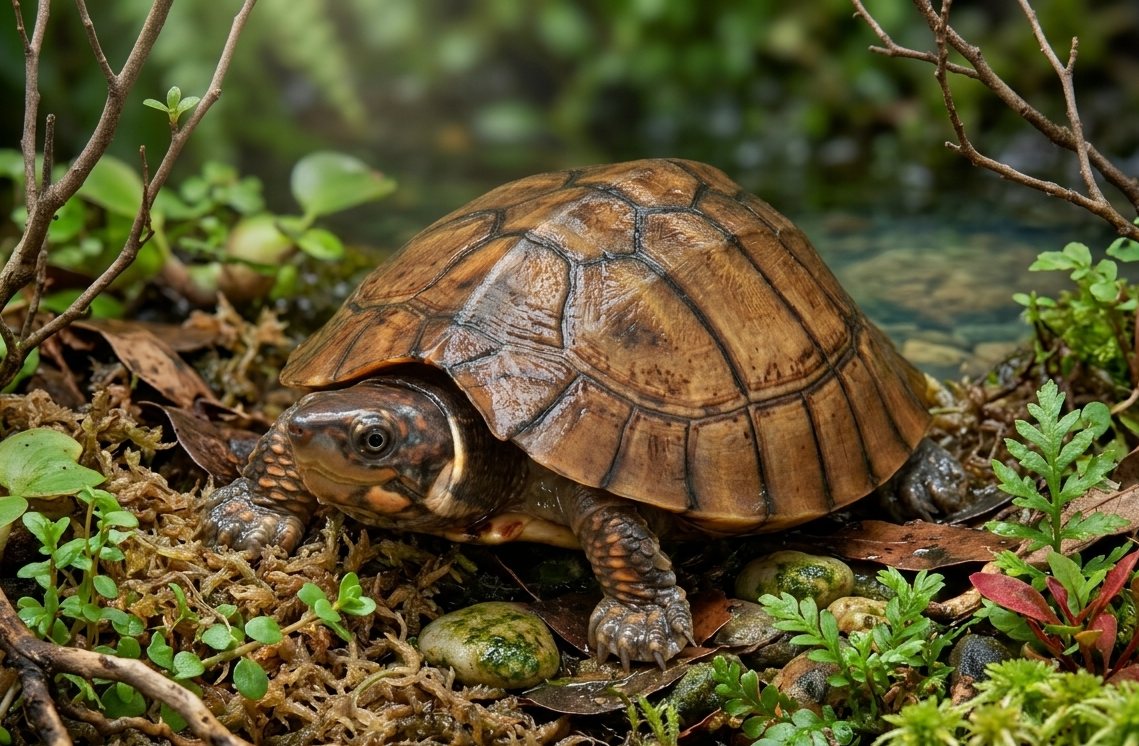
One of the world's most endangered freshwater turtles — found only in Leyte and Palawan. Critically threatened by habitat loss and collection for the illegal pet trade.
Critically Endangered
A venomous cobra endemic to the southern Philippines — found on Mindanao, Samar, Leyte, and nearby islands. Its cytotoxic venom and bold temperament make it one of the most medically significant snakes in the region.
Least ConcernThe world's only fruit-eating monitor lizard — a remarkable evolutionary anomaly. Found on Luzon and nearby islands, it climbs trees to reach fruiting canopy plants and plays an irreplaceable role as a forest seed disperser.
VulnerableA large, powerfully built monitor lizard found across the Philippine archipelago. An opportunistic predator, it hunts fish, crabs, birds, and small mammals across a wide range of coastal and forest habitats.
Vulnerable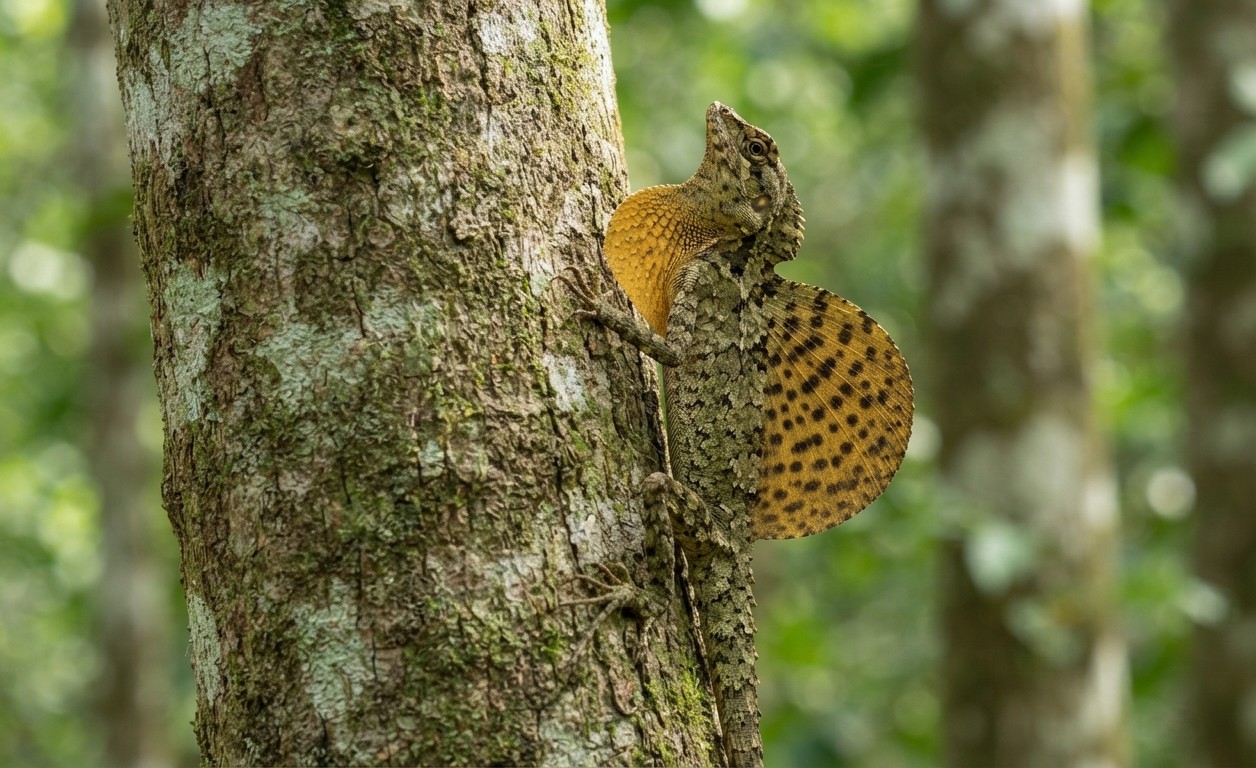
A small agamid lizard capable of gliding between trees by extending its elongated ribs to form a colourful wing membrane. Found across Philippine lowland and montane forests, it is one of the most acrobatic reptiles in Southeast Asia — and a common sight on the trunks of large forest trees.
Least ConcernThe largest gecko in the Philippines — its loud two-syllable call 'to-kay' echoes through Philippine homes and forests at night. A voracious predator of insects and small vertebrates, considered a symbol of good luck but heavily targeted by the illegal wildlife trade for supposed medicinal properties.
Least ConcernOne of the most widespread lizards in the Philippines — its metallic bronze-and-copper scales glimmer in forest sunlight. Found from sea level to over 1,500 metres, this adaptable skink occupies gardens, farms, and primary forest alike, making it one of the most commonly encountered reptiles across the archipelago.
Least Concern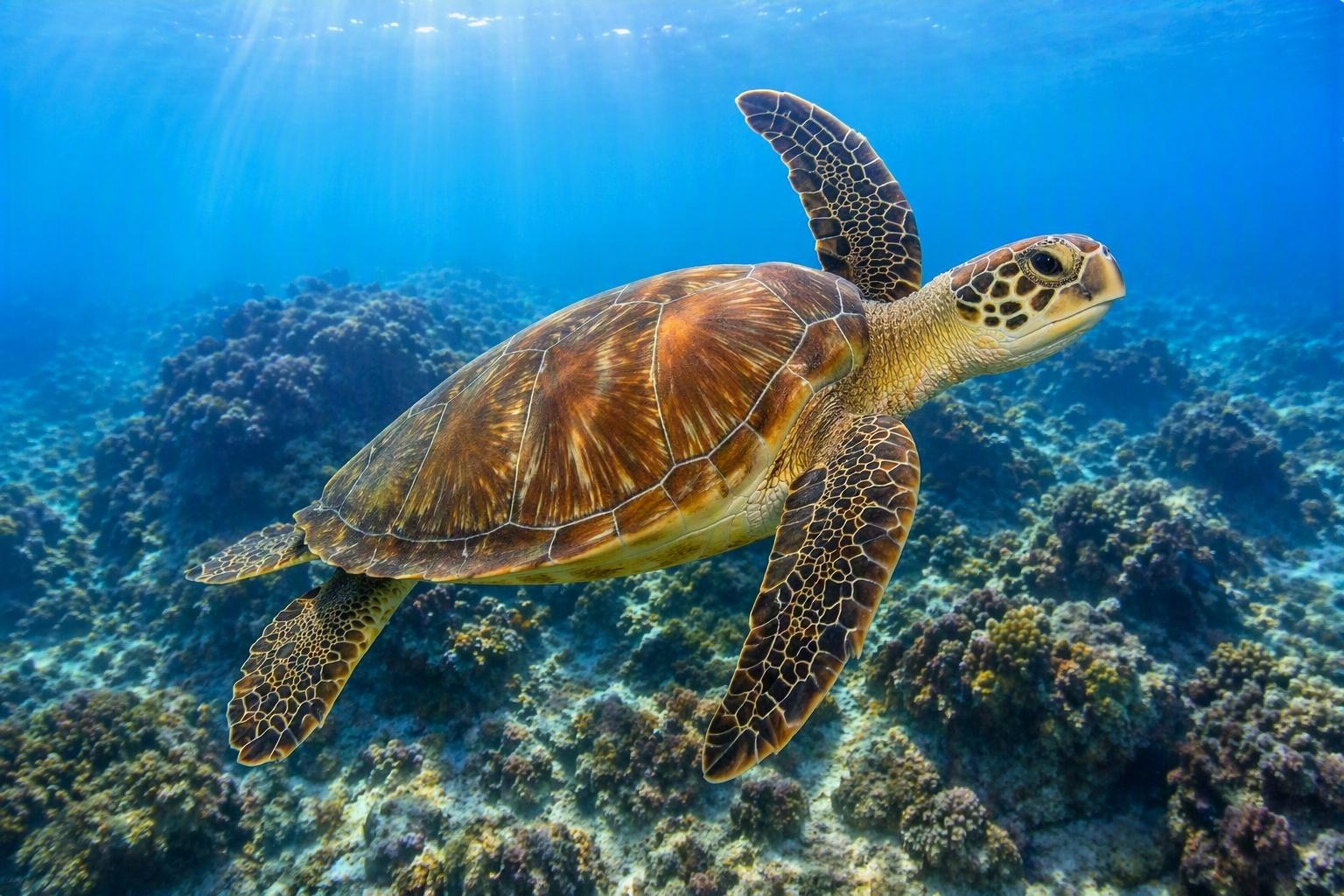
One of five sea turtle species nesting on Philippine beaches. The Philippines hosts critical nesting sites in the Turtle Islands, Palawan, and Batanes — and territorial waters serve as important feeding grounds for this ancient, legally protected ocean traveller.
Least ConcernCritically endangered and among the most threatened sea turtles in the world. Philippine reefs are critical foraging and nesting habitat — yet its striking shell has made it the most heavily exploited sea turtle in history, decimated by centuries of trade in tortoiseshell.
Critically Endangered
The world's longest venomous snake — found in the forests of Luzon, Palawan, Mindanao, and the Visayas. Despite its intimidating size, it preys almost exclusively on other snakes and is rarely aggressive unless threatened or cornered near a nest.
VulnerableThe world's longest snake — found in the rainforests of Luzon, Mindanao, and Palawan. This powerful constrictor is an apex predator capable of taking deer and large pigs. Despite its size, it is increasingly threatened by habitat loss and hunting for skin and meat.
Least ConcernA venomous amphibious sea snake found on Philippine coral reefs and rocky shorelines. Banded in black and blue-grey, it hunts eels and small fish underwater before hauling out onto rocks to rest and digest. Despite its potent venom, it is remarkably docile and rarely bites unprovoked.
Least ConcernThe Philippines' largest lizard — reaching up to 2.5 metres. An adaptable apex predator found from mangrove coasts to highland rivers, it swims powerfully and scavenges alongside crocodiles in Philippine wetlands. Locally known as Bayawak, it plays a vital ecological role as a scavenger and predator.
Least ConcernA spectacular crested agamid lizard found in the highland forests of Palawan and Mindanao. Its rough, bark-like colouring makes it nearly impossible to spot when motionless on a mossy branch — yet when displaying, the male's vivid dewlap blazes like a flame in the forest understorey.
Least Concern.jpg)
One of the world's largest freshwater turtles, also known as Cantor's Giant Softshell Turtle — documented in Luzon's Cagayan, Isabela, and Quirino river systems (including the Addalam River) and in Agusan del Sur and Davao del Norte on Mindanao. A highly secretive ambush predator with a flat, leathery, scute-less shell that stays buried in sand or mud for nearly its entire life.
Critically EndangeredOne of the largest frogs in the Philippines — a powerful, fanged predator of forest streams. Found across Leyte, Samar, and Mindanao, it hunts crabs, smaller frogs, and invertebrates from streamside rocks, defending territories with surprisingly aggressive physical combat.
VulnerableA remarkable frog of Mindanao forest floors whose eggs hatch directly as miniature froglets, with no tadpole stage at all. A master of leaf-litter camouflage, it ambushes invertebrates from the forest floor and is rarely detected despite being widespread across the southern Philippines.
Least ConcernA spectacular gliding frog found in the rainforests of Palawan and northern Mindanao. Its fully webbed feet act as parachutes, allowing glides of over 12 metres between trees. It lays eggs in foam nests above water — the tadpoles drop into the water below when they hatch.
Least ConcernA large, fast-moving, non-venomous snake endemic to Luzon. A skilled climber and agile predator of rodents, birds, and lizards, it plays a critical role in controlling rat populations in Philippine agricultural landscapes — making it one of the most ecologically valuable snakes in the archipelago.
Least Concern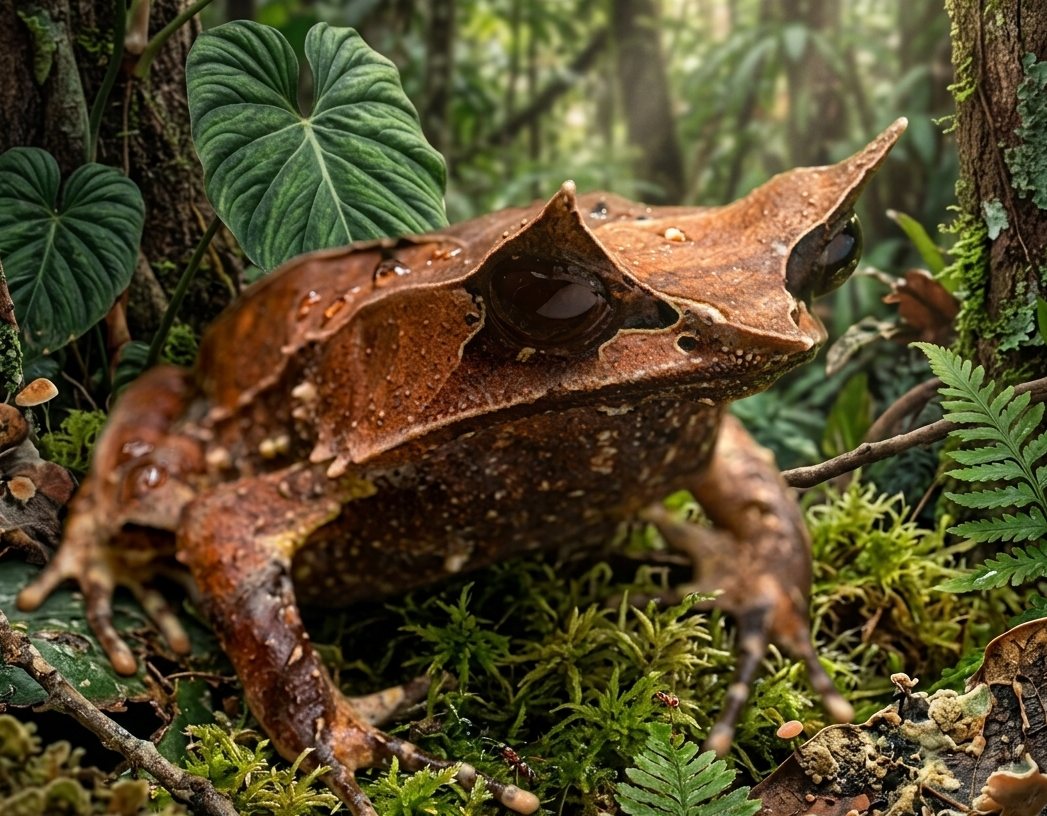
A master of camouflage — its textured skin and leaf-like shape make it nearly indistinguishable from the forest floor. Endemic to Palawan's lowland and montane rainforests.
Vulnerable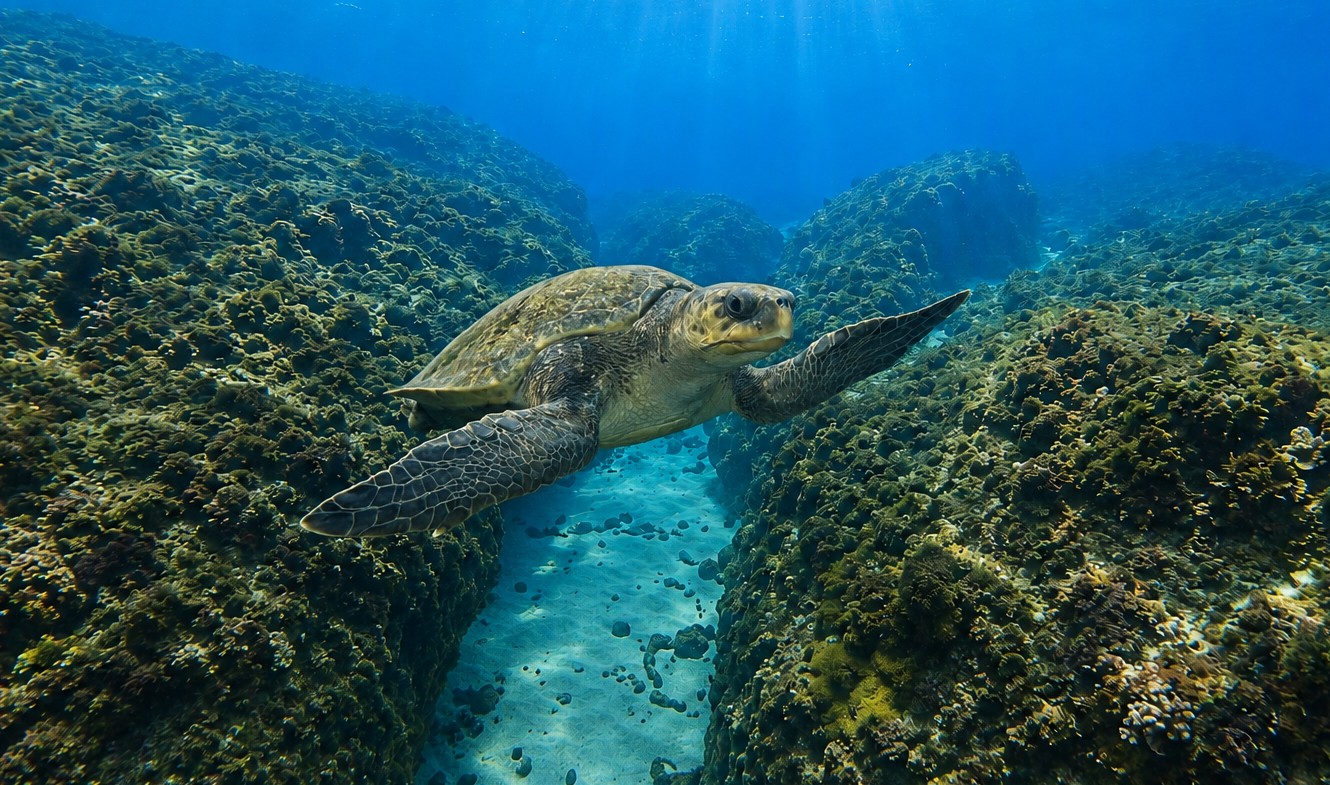
The most abundant sea turtle in the world — yet still Vulnerable, facing pressure from bycatch, coastal development, and egg collection. Documented along Philippine coasts including Ilocos Norte, it is named for its olive-grey shell and is the smallest of the sea turtles.
Vulnerable.jpg)
A large Philippine endemic monitor lizard found along rivers, mangroves, and forest edges across the archipelago. Its intricate marbled patterning distinguishes it from its Southeast Asian relatives. An opportunistic predator and scavenger capable of taking fish, frogs, crabs, and carrion.
Least Concern.jpg)
Endemic to just two islands on Earth — Batan and Sabtang in the Batanes group — this is the only pit viper species recorded within the Batanes Islands. Up to 1 m long, with a large triangular head and heat-sensing pits between eye and nostril; body colour is highly variable between individuals, but a solid red tail is a consistent field mark regardless of morph.
Endangered.jpg)
A gliding lizard endemic to Batan Island in the Batanes group, spending almost its entire life in trees and gliding between trunks on wing-like flaps of skin. Typically found on tree trunks 1.5–6 m above the ground, in forest from sea level up to 900 m elevation.
Least ConcernConservation
The Philippines has lost over 70% of its original forest cover. Every species documented here depends on urgent collective action.
Click any card to view full details.