 Expedition PH Natural History
Philippine Insects
21,000+ insect species, 70% endemic — giant moths, birdwing butterflies, synchronised fireflies, and 110+ endemic tiger beetle species.
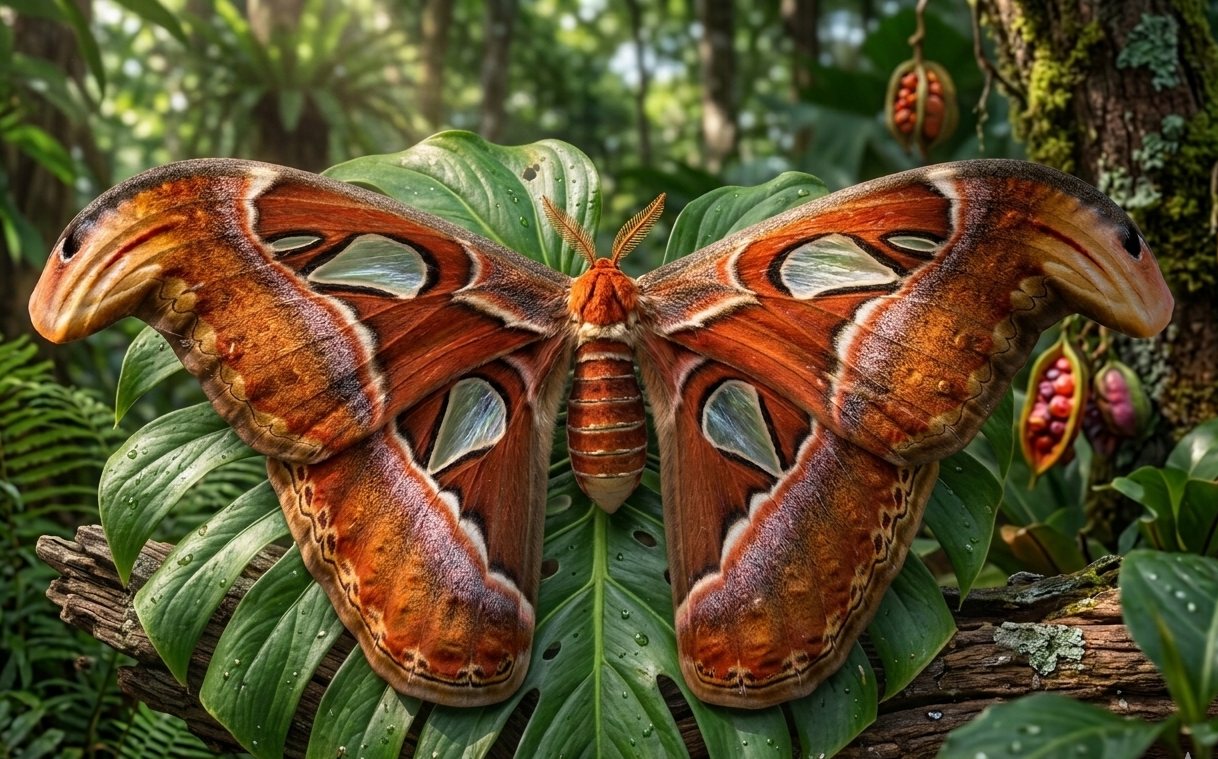
One of the largest moths in the world — with a wingspan reaching 30 cm. It has no mouth and cannot eat as an adult, surviving entirely on fat reserves stored during its caterpillar stage. Its wingtips mimic snake heads to deter predators.
The Collection
Twenty-four species — moths, butterflies, beetles, fireflies, dragonflies, mantids, scorpions, and more — representing the vast invertebrate diversity of the Philippine archipelago.
One of the largest moths in the world — its wingspan can reach 30 cm. The wingtips of its wings mimic the head of a snake to deter predators. Found in Philippine forests from lowlands to highlands.
Least Concern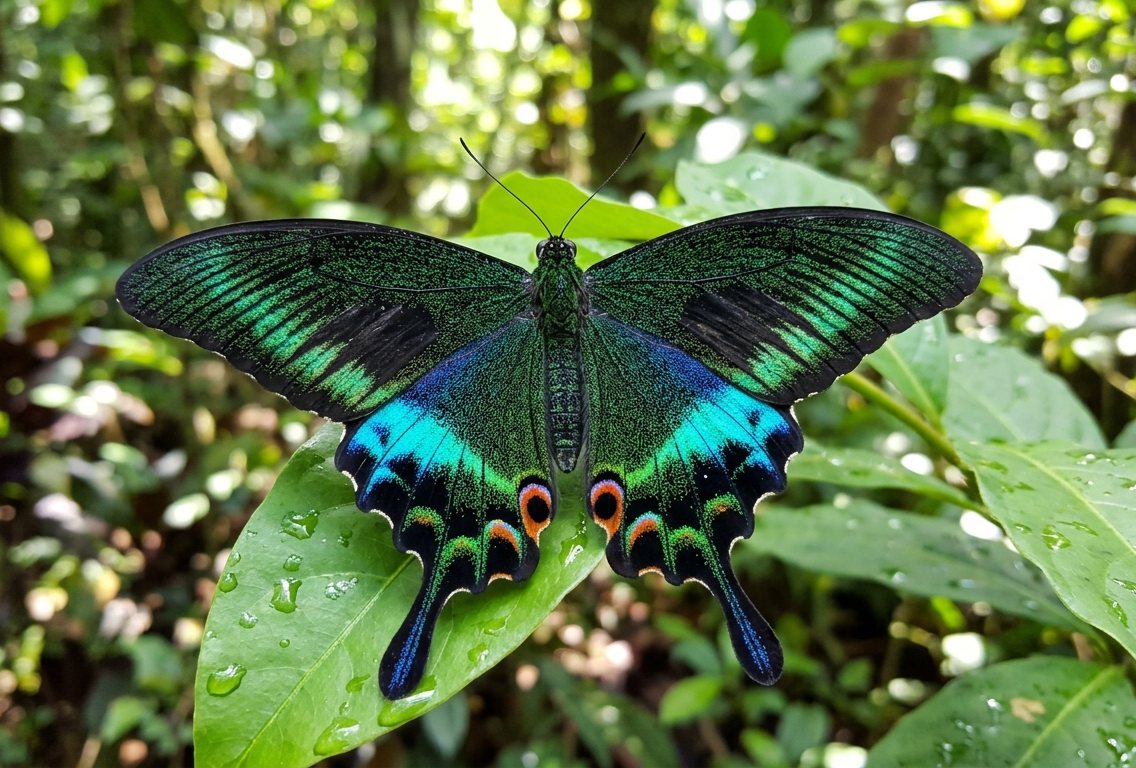
One of the world's rarest and most beautiful butterflies — found only in the highland pine forests of the Cordillera in Luzon. Its dazzling iridescent wings make it one of the most coveted species among collectors, adding to the pressure it already faces from habitat loss.
Endangered
One of the largest butterflies in the world — with a wingspan reaching 19 cm. Found only in Palawan and a few Visayan islands, its golden-yellow hindwings and velvety black forewings make it the most spectacular butterfly in the Philippine archipelago.
Vulnerable
The largest butterfly found exclusively in the Philippines — endemic to Palawan. Its unusually triangular wings of deep emerald green and black distinguish it from all other birdwings. A protected species and an icon of Palawan's extraordinary natural heritage.
Vulnerable
A striking black and crimson birdwing butterfly found in the forests of Mindanao and Samar. One of the most visually dramatic Philippine butterflies — its vivid red colouring signals toxicity to predators and makes it immediately recognisable in the forest canopy.
Vulnerable
One of the most iridescent butterflies in the world — its wings shimmer between emerald green and gold depending on the angle of light. Found in the rainforests of Palawan and Mindanao, it is a favourite subject of wildlife photographers and an important forest pollinator.
Least Concern
A large, brilliantly coloured swallowtail butterfly widespread across the Philippine archipelago. The female is a remarkable mimic — she can resemble different toxic species on different islands, one of the most complex mimicry systems known in any butterfly.
Least ConcernOver 110 of the world's tiger beetle species are found only in the Philippines — the highest concentration of endemic tiger beetles anywhere on Earth. These iridescent, fast-moving predators inhabit forest floors, riverbanks, and open sandy areas across every major island group.
Data DeficientSeveral endemic firefly species illuminate the mangrove forests of the Philippines — creating synchronised light displays along riverbanks that are among the most spectacular natural phenomena in Southeast Asia. Their populations are declining due to light pollution and mangrove loss.
VulnerableAn entirely new genus of stick insect discovered on Mount Halcon, Mindoro — described by science only in 2012. Its extraordinary camouflage makes it virtually indistinguishable from the forest branches it clings to, and its discovery highlighted how much of Mindoro's highland fauna remains unknown.
Data DeficientA diverse genus of damselflies endemic to the Philippines — with new species still being discovered in highland forest streams. Their iridescent wings and aquatic larvae make them both beautiful and ecologically vital indicators of freshwater ecosystem health.
Data DeficientA widespread and visually striking dragonfly found across the Philippine archipelago. The male's vivid scarlet body and wing markings are among the most recognisable of any Philippine insect — a common sight above rice paddies, ponds, and slow-moving forest streams.
Least ConcernA group of large, strikingly patterned beetles endemic to Philippine forests. The adults are impressive with antennae exceeding body length, while their larvae play a vital ecological role as wood decomposers — breaking down dead timber and recycling nutrients back into the forest floor.
Data DeficientThe defining sound of the Philippine forest — cicadas of the genus Dundubia produce deafening, multi-layered choruses from the treetops. Several species are endemic to specific islands or mountain ranges, their calls so distinct that scientists use sound recordings to identify new species.
Data DeficientSeveral tarantula species are endemic to the Philippines — found in the forest floors and root systems of Luzon, Mindanao, and Palawan. These large, hairy spiders are important predators of forest invertebrates and are increasingly threatened by habitat loss and collection for the pet trade.
Data DeficientOne of the world's most convincing leaf mimics — its flattened, lobed body resembles a living green leaf in extraordinary detail, complete with vein markings and irregular bite marks along the edges. Found in the rainforests of Palawan and Mindanao, it is virtually invisible when motionless among fallen leaves.
Least ConcernA large ambush predator of Philippine forests and gardens — remarkable for its binocular vision, rotating head, and lightning-fast strike. Several species are endemic to the Philippines, occupying habitats from lowland forest to highland grasslands as apex predators of the insect world.
Least ConcernOne of the largest centipedes in the world — a formidable nocturnal predator found across the Philippine archipelago. It hunts mice, frogs, geckos, and large insects with venomous forcipules, and its bold, aggressive behaviour makes it one of the most fearsome invertebrates on the Philippine forest floor.
Least Concern
A striking iridescent-blue butterfly found across the Philippine archipelago. Toxic to predators from birth due to alkaloids absorbed from its larval food plants, it flies boldly and openly through the forest — advertising its unpalatability with its brilliant metallic wing sheen.
Least ConcernA highly aggressive, cooperative ant that builds elaborate leaf nests in the Philippine forest canopy. Colonies can number hundreds of thousands and defend territories aggressively — preying on insects many times their individual size. Their acidic bite and larvae are used as flavour ingredients in traditional Filipino cuisine.
Least ConcernOne of Asia's largest scorpions — a powerful nocturnal predator of the Philippine forest floor. Its glossy black exoskeleton glows blue-green under ultraviolet light, a fluorescence unique to scorpions whose evolutionary purpose remains a mystery to scientists.
Least ConcernA massive beetle whose adults tunnel into coconut palm crowns to feed on sap — making it one of the most economically significant insects in the Philippines. Despite its pest status, it plays an important ecological role as a decomposer of dead wood, and is deeply embedded in traditional ecological knowledge of many Philippine farming communities.
Least ConcernA formidable aquatic predator found in Philippine rice paddies, ponds, and slow-moving streams. This giant water bug ambushes prey many times its own size — including fish, frogs, and small birds — and is also a cherished delicacy in rural Philippine communities, eaten fried or used as a flavouring in traditional sauces.
Least ConcernA group of predatory insects found across Philippine forests and gardens — named for their ambush hunting style and venomous bite. Several species are endemic to specific Philippine islands and play an important role as natural pest controllers in forest and agricultural ecosystems.
Data DeficientConservation
The Philippines has lost over 70% of its original forest cover. Every species documented here depends on urgent collective action.
Click any card to view full details.